
更新 | Updated: 2025年12月 | Dec 2025
随着社会的变迁,新加坡传统农历新年习俗也随着在变。在拜拜的习俗您知道农历年的习俗吗? 阅读下去
With the modernisation of Singapore, the traditional practices of Chinese New Year has also changed. Do you know the traditional prayer practices of Chinese New Year? Read More
新加坡传统农历新年习俗
农历新年的准备在农历十二月【也称为腊月】就开始了。家家户户会进行大扫除,把家里打扫干净,并布置新年的装饰。同时也会开始准备新年的食物。如今食物可以直接购买现成的,房屋也可以请人来清洁。但是在祭拜这一方面,仍然建议亲自进行。本文篇幅较长,您可以点击链接跳转到感兴趣的部分阅读。
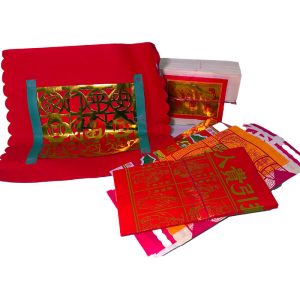
清囤
时间点:农历12月24日前
家里有安神,必须在农历12月24日前做清囤的动作。这是把神明桌打扫干净。用新的抹布和清囤专用的软毛刷。不要用扫把哦。 阅读更多
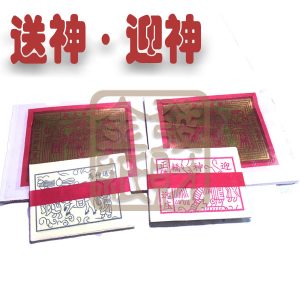
送神
时间点:农历12月24日子时 【23日的晚上11点后】
一般是送灶神回天庭,但是各师各法 – 不同的人有不同的做法。
传说这一天灶神回回到天庭向玉皇上帝禀报每个人的善与恶。就算你的家没安灶神,祂也能一律禀报你的善恶。所以人们会用甜食来送祂,所以吃了甜食,嘴甜说好话。也有人说用年糕吃了粘嘴不能说话。何必呢?那连好事都不禀报了嘛?多做好事,不做恶事那就好了呗。
年除夕拜祖先
时间点:年除夕
也许每个人都会记得年除夕是吃团圆饭的日子,但是也不要忘了祖先。一般华人的家庭会在年除夕拜祖先。要是家里有安祖先牌位的就很方便,只需要买祖先爱吃的食物来祭拜。
但让啦,老一辈的会拜鸡鸭鱼,豆干和一碗菜。对于新时代的年轻人和现代的家庭,是无法吃得完这些菜的,所以有买包菜饭去拜祭祖先已经很好了。
建议产品
-

916 Gu Li Huang Joss Paper (916古力皇)
Price range: $6.30 through $16.00 -

Wang Sheng Qian-4030【4030往生钱】
$2.10 -

50 Million Hell Bank Note- 五千万
$2.50
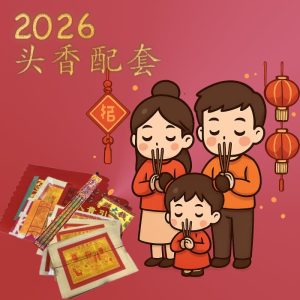
大年初一 – 插头香
时间点:年初一子时【除夕晚上的11点】
不同的地区有不同的仪式。有些庙会举办抢头香的活动,这些活动一般都很热闹。但是这些活动人多要维持秩序。
头香的意义是您新的一年插的头一炷香。可以是在您家拜神的第一炷香,也可是您到庙里的第一炷香。
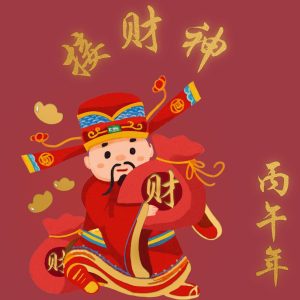
接财神
时间点:吉日 / 初五
人们通常会选择吉日,或在初五接财神。初五是财神诞,也是接财神的好日子。若要提前接财神,就需要挑选合适的吉日。
这并不困难,只需准备好鲜花、蔬果、香炉、香和蜡烛即可。我们已为接财神准备好所需的用品,您只需准备香炉和鲜花蔬果。 阅读更多
接神
时间点: 初四
年前的十二月廿四,把灶神送回天庭,在初四这一天,人们会把灶神迎接回来。一般就用年柑,发糕和金纸拜拜。
拜天公【天公生】
时间点: 初九凌晨(初八过了晚上11点)
初九是玉皇大帝的诞辰,一般是福建人在拜天公生。在这一天的凌晨信徒就开始拜天公,向玉皇上帝祝寿。以前拜天公是个很大的活动,拜的非常的隆重。最大的特色是一对甘蔗和黄色的吊钱绑在甘蔗上。 阅读更多
Recommended products

元宵节 – 上元节 拜天官大帝
时间点:十五的子时 (十四的晚上11点)
来到了正月十五-元宵节。这一天也是上元节,天官大帝诞。天官大帝一般是潮州人在拜。当然现在因不同籍贯的人结婚,拜拜的差异也来也不明显了。民间相信天官赐福,所以人们会在这一天拜天官大帝和做补运的活动。
Traditional Singapore Chinese New Year in Practices
Preparations for the Lunar New Year begin in the twelfth month of the lunar calendar, also known as làyuè. Every household carries out a thorough cleaning, tidying the home and decorating it with New Year ornaments. At the same time, families also start preparing food for the festival.
Nowadays, ready-made food can be purchased directly, and professional services can be hired to clean the house. However, when it comes to jìbài (ritual worship), it is still recommended to do it personally.
This article is quite long, and you may click the link to jump to the section you are most interested in.
| Activity | 清囤] (qīng tún) | 送神 (sòng shén) | 拜祖先 (bài zǔxiān) | CNY First Prayer | 接财神 (jiē cáishén) | 迎神 (yíng shén) | 拜天公 (bài tiāngōng) | 拜天官大帝 (bài tiānguān dàdì) |
| Date (Lunar) | Before 12th Month 24th Day | 12th Month 24th Day | CNY Eve | CNY | Good Day 5th day | 4th Day | 9th Day | 15th Day |
Cleansing ritual 清囤(qīng tún)
Timing:Before Lunar 12th Month 24th Day
If there is a household deity, you must perform the cleansing ritual (清囤 – qīng tún) before the 24th day of the 12th lunar month. This means thoroughly cleaning the altar table. Use a new cloth and a soft brush specifically for this ritual. Do not use a broom.
Sending of Kitchen deity
Timing:Lunar 12th Month 24th day (Usually start on the day before at 11pm)
Usually, people send the Kitchen God back to Heaven, though each tradition has its own way of doing it.
Legend says that on this day, the Kitchen God returns to Heaven to report every person’s good and bad deeds to the Jade Emperor. Even if your household doesn’t enshrine the Kitchen God, he will still report your deeds.
That’s why people offer sweet foods to him—so that after eating sweets, his mouth will be sweet and he’ll speak good words. Some say offering sticky rice cakes makes his mouth stick together so he cannot speak. But why do that? Then even the good deeds wouldn’t be reported! It’s better to simply do more good and avoid evil—that’s what truly matters.
Ancestral Prayer on CNY Eve
Timing:CNY Eve
Perhaps everyone remembers that Lunar New Year’s Eve is the day for the reunion dinner, but we should not forget our ancestors. In most Chinese families, it is customary to honor the ancestors on New Year’s Eve. If the household has an ancestral tablet, it is very convenient. One simply needs to prepare the foods that the ancestors enjoyed and offer them in worship.
Traditionally, the older generation would prepare offerings such as chicken, duck, fish, tofu, and a bowl of vegetables. But for younger people and modern families today, it’s difficult to finish all those dishes. So even buying a simple packet of mixed rice to offer to the ancestors is already a meaningful gesture.
Recommended products
-
916 Gu Li Huang Joss Paper (916古力皇)
Price range: $6.30 through $16.00 -
Wang Sheng Qian-4030【4030往生钱】
$2.10 -
50 Million Hell Bank Note- 五千万
$2.50
Chinese New Year First Prayer
Timing:Chinese New Year Day
Different regions have different rituals. Some temples hold “抢头香” (Place the first incense) events, which are usually very lively. Because these gatherings attract large crowds, it’s important to maintain order.
The meaning of the first incense is that it represents the very first stick of incense you offer in the new year. It could be the first incense you place at your home altar, or the first incense you offer at a temple.
Invite God of Wealth
Timing:Auspicious Day / 5th day of CNY
People usually choose an auspicious day, or welcome the God of Wealth on the fifth day of the Lunar New Year. The fifth day marks the birthday of the God of Wealth, making it an especially good day to invite him. If you wish to welcome him earlier, you’ll need to select a suitable auspicious date.
This is not difficult, simply prepare fresh flowers, fruits and vegetables, an incense burner, incense sticks, and candles. We have already prepared the necessary items for welcoming the God of Wealth; you only need to provide the incense burner and the fresh flowers and fruits.
Invitation of Kitchen Deity
Timing: 4th day of CNY
On the 24th day of the 12th lunar month, the Kitchen God is sent back to Heaven. On the 4th day of the new year, people welcome the Kitchen God back. The offerings usually include mandarin oranges, rice cakes, and prayer paper.
Jade Emperor Birthday Prayer
Timing: 8th day of CNY 11pm
The ninth day of the Lunar New Year marks the birthday of the Jade Emperor. Among the Hokkien community, this day is known as “拜天公生” (worshipping Heaven’s Lord). In the early hours of this day, devotees begin their prayers, offering birthday wishes to the Jade Emperor.
In the past, this ritual was a grand and solemn event. Its most distinctive feature was a pair of sugarcane stalks, with yellow paper money tied to them.
Yuanxiao Jie 15th day of CNY: Worship of Tianguan Dadi (天官大帝)
Timing:14th day of CNY 11pm
On the fifteenth day of the first lunar month – Yuanxiao Jie (元宵节). It is also Shangyuan Jie (上元节), the birthday of Tianguan Dadi (天官大帝). Traditionally, Chaozhou people are the ones who worship Tianguan Dadi, though nowadays, because of intermarriage among people of different backgrounds, the differences in worship practices have become less distinct.
In folk belief, Tianguan is said to bestow blessings, so people worship Tianguan Dadi on this day and also carry out rituals known as bu yun (补运), meant to improve or restore one’s fortune.